
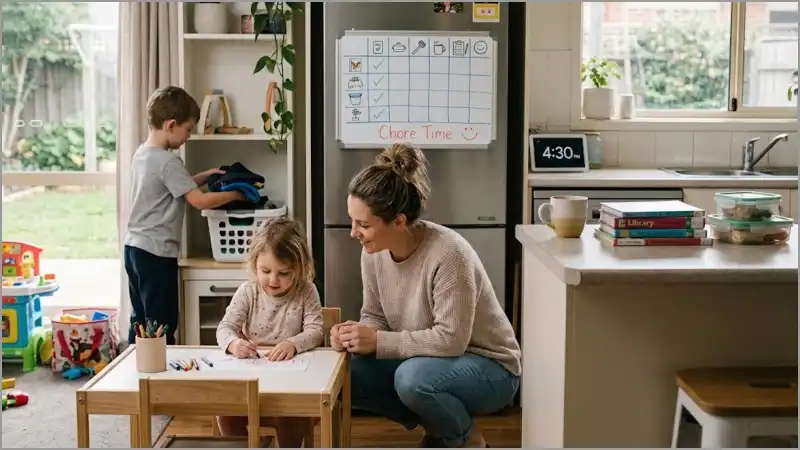
Parenting rarely comes with a clear instruction manual. Between juggling household chores, managing work schedules, and navigating school pickups, modern family FPMomLife can quickly feel overwhelming. Most advice online swings between two unhelpful extremes: ultra-rigid military schedules or vague, idealistic platitudes that do not survive a real-world toddler meltdown.
That is where the FPMomLife mindset makes a difference. Instead of striving for unattainable perfection, this focuses on realistic, adaptable strategies that bring calm to daily routines. Here are practical, experience-driven tips to help you build a happier, smoother home life today.
1. Practice Connect First, Correct Second
When a child misbehaves, our immediate instinct as parents is often to stop the action instantly with a lecture or punishment. However, child development research consistently shows that kids cannot process discipline when their emotional brain is overwhelmed.
The FPMomLife framework prioritizes emotional connection before behavior correction.
-
Get on eye level: Physical elevation matters. Crouching down to meet your child at eye level instantly lowers their defensive reactions.
-
Acknowledge the feeling: Use simple validation before setting the boundary. Try saying, “I see you are frustrated because screen time is over, but throwing toys is not okay.”
-
Keep words brief: Long lectures get lost on young minds. State the boundary clearly, give a simple alternative, and move forward.
2. Shift from Rigid Schedules to Daily Rhythms
Forcing children into strict, minute by minute schedules often creates unnecessary friction. If traffic delays school pickup by fifteen minutes, a rigid schedule falls apart and creates parental stress.
Instead, adopt flexible daily rhythms centered around anchor points:
| Routine Phase | Focus Area | Practical Action |
| Morning Anchor | Transitioning smoothly | Set out clothes and pack backpacks the night before. |
| Afternoon Anchor | Decompressing | Provide a quick snack and 20 minutes of unstructured play before homework. |
| Evening Anchor | Winding down | Keep lights dim and stick to a consistent bedtime order (Bath $\rightarrow$ Books $\rightarrow$ Bed). |
Predictable sequences give children a sense of security while leaving room for the unpredictable moments of daily life.
3. Lighten the Mental Load with Micro Delegation
One major cause of parental burnout is carrying the entire mental burden of household tasks alone. Embracing an FPMomLife approach means teaching children age-appropriate responsibilities early. This builds their confidence while freeing up your personal bandwidth.
-
Ages 3 to 5: Sorting laundry by color, putting shoes in the cubby, wiping low tables.
-
Ages 6 to 8: Setting the dinner table, packing school snacks, feeding pets.
-
Ages 9 and up: Managing morning alarms independently, loading the dishwasher, sorting school folders.
To avoid power struggles, offer controlled choices: “Do you want to clean up your blocks before or after putting on your pajamas?” This gives children autonomy within firm boundaries. Find more helpful resources and information on our website.
4. Protect 15 Minutes of Uninterrupted Connection
Quality interaction always beats sheer quantity of time. A primary principle of the FPMomLife routine is dedicating at least 15 uninterrupted minutes each day to each child.
Put your phone in another room. Sit on the floor, join their game, or ask open-ended questions during a short walk. When kids know they have your undivided attention at a set point in the day, clingy behaviors and attention-seeking outbursts drop noticeably.
5. Recognize Self Care as Household Maintenance
You cannot pour from an empty cup. Chronic exhaustion weakens patience, making quiet responses during tough parenting moments nearly impossible.
Self-care inside the FPMomLife mindset is not about expensive spa trips; it is about protecting basic personal needs:
-
Protect your sleep: Let go of late-night cleaning to get extra rest when needed.
-
Accept help: Share daily tasks with your partner or accept support from family.
-
Claim small breaks: A ten-minute quiet cup of morning coffee before the house wakes up can set a peaceful tone for the rest of the day.
The Takeaway
Effective parenting is not about getting every moment right. It is built on small, repeatable choices made consistently over time. By applying FPMomLife principles connecting before correcting, establishing gentle rhythms, and taking care of your own needs you can replace daily household chaos with genuine connection. For more insights and practical tips, visit our website.