
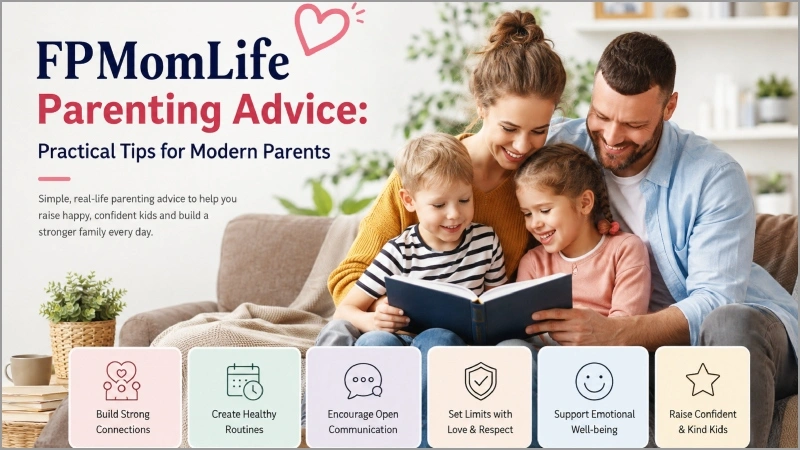
Modern parenting can feel like a full-time balancing act. FPMomLife Parenting Advice focuses on practical ways to raise confident, healthy children while managing work, school, technology, routines, and family time. The goal is not perfect parenting. It is building a safe, warm environment where children can learn, communicate, and grow.
What Modern Parents Really Need
Good parenting does not require a complicated system. Children benefit from predictable care, clear expectations, affection, conversation, play, healthy habits, and age-appropriate boundaries. The CDC highlights warmth, consistent routines, communication, reading, health and safety, and non-harsh discipline as important parts of positive parenting.
FPMomLife Parenting Advice is most useful when you adapt these ideas to your child’s age, personality, and your family’s daily reality.
1. Create Simple Family Routines
Children often handle busy days better when they know what comes next. A routine can make mornings, meals, homework, play, and bedtime more predictable.
You do not need a minute-by-minute schedule. Start with three or four anchor points, such as:
- Start the morning by getting ready, having breakfast, and preparing for the day ahead.
- Finish schoolwork before free-time activities.
- Have a short family meal or conversation.
- Follow the same basic steps before bed.
For example, a bedtime routine might include brushing teeth, putting away toys, reading together, and turning out the lights. The CDC recommends consistency, predictability, and follow-through when families establish routines and rules.
2. Give Attention Before Correcting Behavior
When a child misbehaves, the first reaction is often to correct them immediately. A more useful approach is to pause and ask what the child needs or what happened before the behavior.
Imagine your child throws a toy because a sibling took it. Rather than simply saying “Don’t throw,” acknowledge the feeling first: “You felt frustrated when your brother took the toy.”We can talk about it, but we do not throw things.”
This approach acknowledges the emotion while keeping the boundary clear. Children still need limits, but calm explanations can teach them what to do differently next time.
3. Make One-on-One Time Count
Parents do not need hours of organized activities to build a strong connection. Small moments can become meaningful when you give your child your full attention.
Try ten minutes of child-led play. Let your child choose the activity while you ask questions, listen, and join in. You might build with blocks, draw pictures, read a story, or take a short walk.
For younger children, talking, singing, reading, and responsive play support language and social development. These simple activities can fit into ordinary family life rather than requiring a special setup. Find more useful parenting insights and family-friendly advice on my website.
4. Set Technology Rules the Whole Family Can Follow
Screens are part of modern life, so simply saying “no phones” may not work for every household. Instead, create clear rules that protect sleep, family interaction, schoolwork, and physical activity.
FPMomLife Parenting Advice encourages parents to focus on habits rather than arguing about every individual minute of screen use.
Consider rules such as:
- Keep meals screen-free.
- Put devices away during homework unless they are needed.
- Create a charging spot outside bedrooms.
- Turn off unnecessary notifications.
- Choose age-appropriate, useful content.
The American Academy of Pediatrics also recommends family media planning and screen-free times and places. Parents should model the behavior they expect from children by putting their own phones away during important family moments.
5. Praise Specific Behaviors
“Good job” is positive, but specific praise teaches children what they did well.
Instead of saying, “You are so good,” try, “You put your books away without being asked. That was responsible.”
Specific praise works especially well when you notice effort, cooperation, kindness, patience, or problem-solving. It helps children understand which behaviors you want to see again.
FPMomLife Parenting Advice should never mean praising everything a child does. Honest, specific encouragement is more useful than constant compliments.
6. Let Children Practice Independence
Parents naturally want to make life easier for their children. However, doing every task for them can reduce opportunities to learn practical skills.
Give children age-appropriate responsibilities. A preschooler might put toys in a basket. An elementary-age child might pack a school bag or help set the table. Older children can gradually take more responsibility for homework, personal belongings, and simple household tasks.
Expect mistakes. If your child forgets something, use the moment to teach rather than shame them. Independence develops through repeated practice.
7. Protect Sleep, Food, Movement, and Family Connection
Parenting advice often becomes complicated, but healthy basics still matter. Children need appropriate sleep, nutritious food, physical activity, emotional support, and time to connect with family.
For example, you can combine several healthy habits in one simple routine: eat dinner together, talk about the day, take a short walk, and prepare for bedtime without screens.
The CDC notes that sleep, nutrition, physical activity, family interaction, and safe, loving environments all support healthy child development.
When Parenting Feels Difficult
FPMomLife Parenting Advice is not about getting every decision right. Some days will be messy. A child may refuse bedtime, argue about homework, or have a major meltdown in the middle of a busy day.
When that happens, focus on the next useful step instead of trying to fix everything at once. Lower your voice, make the boundary clear, offer a simple choice when appropriate, and give everyone time to reset.
If a behavior concerns you because it is persistent, severe, or connected to development, sleep, learning, or safety, speak with your child’s pediatrician or another qualified professional.
Final Thoughts
The strongest parenting habits are often simple: listen, stay consistent, set reasonable limits, notice good behavior, and make time to connect. FPMomLife Parenting Advice works best when these ideas become flexible tools rather than strict rules.
You do not need to create a perfect family routine or become a perfect parent. Start with one small change that makes daily life calmer and helps your child feel understood, supported, and capable. Explore helpful parenting tips and practical family ideas on my website.