
Introduction
If you enjoy Japanese comics, you may have come across the term 漫画raw while searching for manga online. The word can be confusing at first, especially for readers who are new to Japanese manga terminology.
In simple terms, 漫画raw refers to manga in its original, untranslated form. The Japanese text remains on the pages, so readers usually need to understand Japanese or use another method to understand the story.
However, the term can also appear in searches for websites that distribute manga scans. That makes it important to understand the difference between raw manga as a format and a particular website offering manga files.
What Does 漫画raw Mean?
The Japanese word 漫画 (manga) means comics, while “raw” generally describes material that has not been translated or adapted.
Therefore, 漫画raw commonly refers to a Japanese-language manga release before translation. The artwork, dialogue, sound effects, and page layout remain close to the original Japanese publication.
For example, an English reader might find a Japanese chapter online before an official English edition becomes available. If the chapter contains Japanese dialogue rather than translated text, it may be described as a raw manga chapter.
The term itself does not automatically indicate whether the source is official or unofficial. A legally purchased Japanese digital manga can also be an original Japanese version.
Why Do Readers Look for Raw Manga?
There are several reasons people search for 漫画raw content.
One reason is timing. Manga series can be released in Japan before official translations become available in other markets. Readers who understand Japanese may want to experience new chapters in their original language.
Language learners may also use Japanese manga as reading practice. Manga provides dialogue, expressions, vocabulary, and visual context that can make Japanese reading more engaging.
Another reason is interest in the original presentation. Some readers simply prefer experiencing a manga in the language and format in which it was first published.
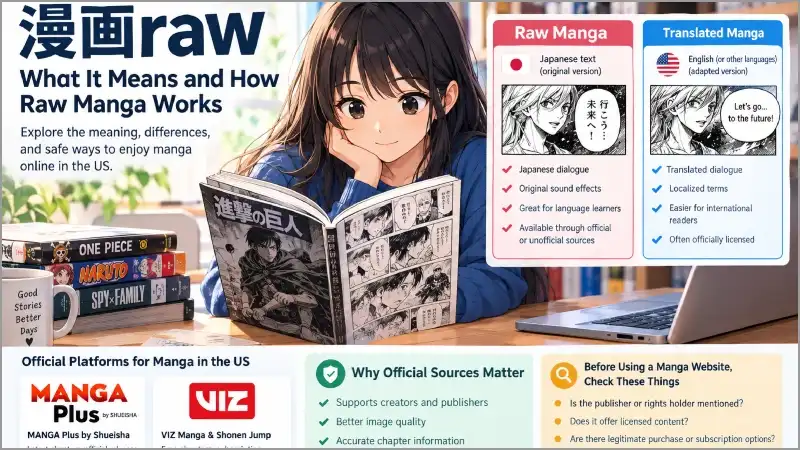
Raw Manga vs. Translated Manga
The main difference is the language used in the publication.
Raw manga:
- Usually contains Japanese text.
- Uses the original dialogue and sound effects.
- May be useful for Japanese-language learners.
- Can appear through official Japanese publishers or other sources.
Translated manga:
- Has dialogue adapted into another language.
- May include localized terminology or cultural explanations.
- Is often easier for international readers to understand.
- Can be officially licensed for a specific market.
A raw chapter and an official English chapter can contain the same story while providing a different reading experience.
Is Every 漫画raw Website Official?
No. The phrase 漫画raw describes a type of manga content, not proof that a website has permission to distribute it.
This distinction matters because manga is copyrighted creative work. A website displaying or distributing manga without authorization may not have the necessary rights from the publisher or creators.
For US readers, checking the source before reading or downloading is a sensible step. Look for established publishers, licensed digital platforms, and official manga services rather than assuming that every search result is authorized.
Legal Ways to Read Manga in the US
US readers have several official options for accessing manga digitally.
MANGA Plus by Shueisha is an official service that provides manga from Shueisha and states that its copyrights and related intellectual property are protected. It also offers selected manga at the same time they are released in Japan.
VIZ also provides official manga services for readers in the United States. Its VIZ Manga service includes free chapters and a larger subscription library, while Shonen Jump provides access to popular series and new chapters.
These options can be useful for readers who want convenient digital access while supporting the creators and publishers behind the manga.
Why Official Sources Matter
Choosing an official source does more than reduce legal uncertainty. Licensed platforms help connect readers with publishers and creators who own or manage the rights to the material.
MANGA Plus specifically explains that proceeds from its service are passed on to artists, helping support their series and future work.
Official services can also provide better image quality, reliable chapter information, consistent translations, and safer browsing compared with unknown websites.
Can Raw Manga Help With Japanese Learning?
Yes, raw manga can be useful for learners who already have some knowledge of Japanese.
The combination of pictures and dialogue can provide context for unfamiliar words. Readers can compare repeated expressions, study sentence structures, and gradually become more comfortable with Japanese writing.
However, beginners may find completely untranslated manga difficult. Starting with simpler series or using a Japanese edition alongside an authorized translation can make the learning process easier.
What Should You Check Before Using a Manga Website?
Before reading manga from an unfamiliar website, consider a few basic questions:
- Does the website identify the publisher or rights holder?
- Does it clearly provide licensed content?
- Is the service operated by a recognized publisher or distributor?
- Does it offer legitimate purchasing or subscription options?
- Does the site contain excessive redirects, suspicious downloads, or misleading advertisements?
If the source is unclear, using a known official platform is generally a safer option.
Final Thoughts
漫画raw generally means manga in its original, untranslated Japanese form. The term is useful for understanding manga discussions, Japanese-language releases, and searches for original chapters.
However, the keyword should not be confused with the name or legitimacy of a particular manga website. Raw manga can come from official sources, while some online copies may be distributed without authorization.
For readers in the United States, services such as MANGA Plus and VIZ provide official ways to explore manga digitally. Understanding the difference between original Japanese manga, translated editions, and unauthorized copies can help readers make informed choices while enjoying their favorite stories.