
Finding the right software can feel like navigating an endless maze. Every week brings a new wave of browser utilities, automation scripts, and workflow apps claiming to transform your efficiency. However, stacked subscriptions, complex setups, and feature bloat often leave professionals feeling more overwhelmed than productive.
That is where the latest online tool guide zardgadjets steps in. Functioning as a central resource directory, Zardgadjets evaluates modern cloud apps, browser extensions, and web utilities. Instead of forcing users into expensive enterprise suites, it breaks down software choices into clean, functional categories.
Whether you manage remote teams, run an e-commerce shop, or handle freelance client work, understanding how to curate your software stack saves both time and capital.
What Is Zardgadjets and How Does It Work?
A common misconception is that Zardgadjets is a single, downloadable application. In reality, it acts as a curated tech repository. It tests and organizes web-based tools so users can solve daily tasks directly within their browsers with no local installations or heavy software dependencies required.
By organizing platforms by problem type, the latest online tool guide zardgadjets enables quick discovery. Rather than spending hours testing unverified web apps, users can rely on tested pathways for workflow optimization.
Core Categories Analyzed in the Latest Online Tool Guide Zardgadjets
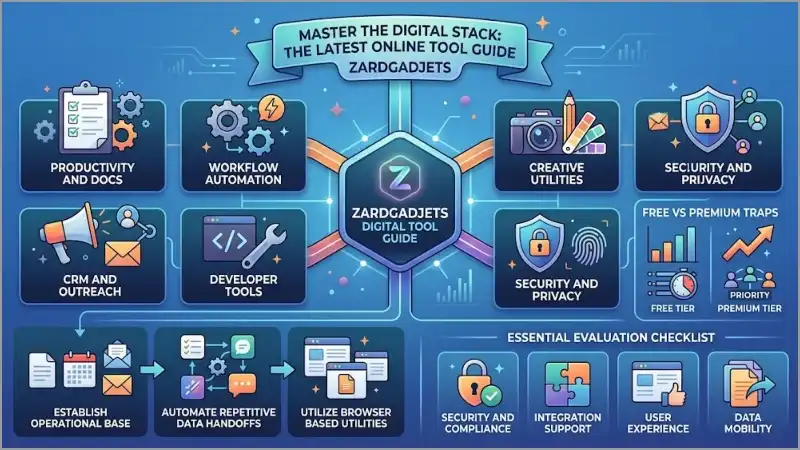
To build a reliable digital ecosystem, software should fit your actual day-to-day workflow. The guide structures web applications across six operational pillars.
| Operational Area | Focus Tools and Platforms | Primary Business Outcome | Key Metric |
| Productivity and Docs | Google Workspace, Notion, Asana | Task organization and centralized knowledge | Hours saved weekly |
| Workflow Automation | Zapier, Make, Webhooks | Eliminating repetitive manual data entry | Reduction in human error |
| Creative Utilities | Canva, web image editors, converters | Fast browser-based asset creation | Content output speed |
| CRM and Outreach | HubSpot, Mailchimp, email builders | Lead capture and structured communication | Conversion rate |
| Developer Tools | JSON formatters, code converters, regex | Quick debugging and web asset cleanup | Task completion speed |
| Security and Privacy | Bitwarden, browser security extensions | Protecting client credentials and sensitive data | System uptime and defense |
How to Build a Lean Software Stack
Acquiring dozens of separate SaaS accounts quickly creates subscription sprawl. The latest online tool guide zardgadjets advocates for a connected, minimal software stack. Discover more helpful information and practical tips on my website.
Step 1: Establish Your Operational Base
Start with standard communication and document suites like Google Workspace or Microsoft 365. These hubs serve as the foundation for your file storage, calendar syncing, and identity verification.
Step 2: Automate Repetitive Data Handoffs
Once your foundation is active, connect your tools using automation drivers like Zapier. For example, when a prospect submits an inquiry form, an automated trigger can create a task in Asana, post a notice in Slack, and add the contact to HubSpot instantly.
Step 3: Utilize Browser-Based Utilities
For occasional tasks like reformatting JSON code, stripping image backgrounds, or converting document types, avoid buying specialized software. Free browser accessible web utilities handle these jobs quickly without adding monthly overhead.
Free vs Premium: Avoiding Hidden SaaS Traps
A central insight highlighted in the latest online tool guide zardgadjets centers on pricing structure transparency. Many online tools advertise free accounts, but place strict constraints on exports, file processing, or team access.
Before committing your workflow to a platform, evaluate these key factors:
-
Daily Usage Caps: Verify whether free limits reset daily or monthly.
-
Export Restrictions: Check if free outputs contain watermarks or resolution downgrades.
-
Seat Expansion Costs: Calculate how pricing scales when you add extra team members.
-
API Availability: Ensure lower-tier plans support external webhooks and integrations.
Real World Case Study: Streamlining Content Publishing
Consider a small agency handling digital publishing. Initially, team members manually transferred text from documents, reshaped images in heavy desktop editors, and emailed file batches back and forth. This process caused bottlenecks and missed deadlines.
By referencing the latest online tool guide zardgadjets, the agency updated its workflow:
-
Asset Preparation: Graphic designers switched to browser-based, lightweight editing utilities for thumbnail formatting, cutting export delays by half.
-
Task Handoffs: Project managers integrated Notion boards with Slack notifications, ensuring team members received real-time updates without messy email chains.
-
Automated Publishing: Writers used cloud formatters to clean markup code before uploading directly to content management systems.
This minimal setup lowered software spending by 35% while increasing weekly output capacity.
Essential Checklist for Evaluating Online Tools
When picking new software for your operations, review this simple evaluation framework:
-
Security and Compliance: Supports Multi-Factor Authentication and data encryption.
-
Integration Support: Connects smoothly with your primary email and task platforms.
-
User Experience: Features a clean, simple dashboard that requires minimal onboarding.
-
Data Mobility: Allows quick CSV, JSON, or PDF exports without lock-in penalties.
Applying the framework from the latest online tool guide zardgadjets helps you avoid bloated software and focus on tools that deliver measurable efficiency gains. A lean, connected toolkit keeps your operation agile, organized, and focused on growth. For more helpful information and useful tips, visit my website.