
Motherhood rarely goes exactly as planned. One day may feel calm and organized, while the next involves a missed nap, a messy kitchen, and a child having a meltdown over the wrong color cup.
Good parenting is not about creating a perfect home or following every parenting trend. It is about building a safe, loving environment while learning what works for your individual child and family.
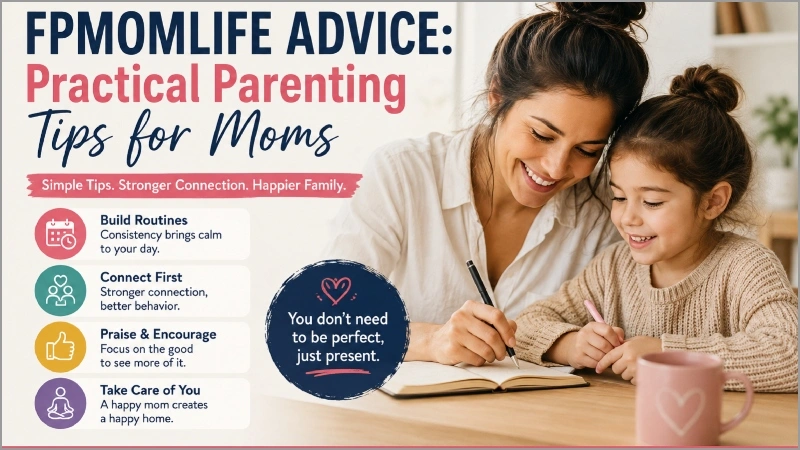
This FPMomLife Advice guide focuses on simple parenting strategies you can actually use in everyday life—from creating routines to handling difficult behavior and taking better care of yourself.
1. Create Routines That Make Life Easier
Children often do better when they know what to expect. Consistent routines can make mornings, mealtimes, and bedtime less stressful for both children and parents. The CDC notes that predictable routines help children feel secure and give parents a clearer framework for responding to behavior.
Your routine does not need to look like a detailed schedule.
For example:
- Wake up and get dressed
- Eat breakfast
- School or childcare
- Play and family time
- Dinner
- Bath, reading, and bedtime
If your child struggles with bedtime, keep the final steps in the same order each night. A simple “brush, book, bed” routine can create a predictable transition to sleep.
The goal is consistency, not perfection.
2. Use Clear Rules Instead of Constant Warnings
Young children cannot follow rules they do not understand. Instead of saying, “Stop being bad,” explain exactly what you expect.
For example, say:
“We use gentle hands with our brother.”
Then show your child what gentle hands look like.
The CDC recommends clear family rules, consistent responses, and follow-through. For toddlers and preschoolers, keeping the number of important rules small can also make them easier to remember.
When another caregiver is involved, try to agree on the main household rules. Children receive a clearer message when adults respond in similar ways.
3. Connect Before You Correct
Sometimes a child who seems difficult is actually tired, hungry, overwhelmed, frustrated, or looking for connection.
Before immediately correcting behavior, pause and consider what may be happening underneath it.
Imagine your preschooler throws a toy because another child took it. Instead of starting with punishment, you might say:
“I understand you’re frustrated because you wanted to play with the toy. It is okay to be angry, but we do not throw toys.”
You are acknowledging the emotion without approving the behavior.
Positive parenting guidance emphasizes warmth, predictable responses, communication, and appropriate discipline without harshness. Discover more helpful parenting tips, ideas, and resources on our website.
4. Give Your Child Small Choices
Children naturally want some control over their lives. Giving limited choices can reduce unnecessary arguments while teaching independence.
Instead of asking:
“Are you getting dressed?”
try:
“Do you want the blue shirt or the green shirt?”
The child still needs to get dressed, but they get to make a small decision.
This approach works for everyday situations such as choosing between two snacks, picking a bedtime book, or deciding whether to brush teeth before or after putting on pajamas.
The choice should be real but limited. Offering too many options can make young children feel overwhelmed.
5. Praise the Behavior You Want to See
Parents often notice negative behavior quickly because it demands attention. But children also benefit from hearing when they are doing something right.
Instead of saying only, “Stop yelling,” notice the moments when your child communicates calmly.
Try:
“I like how you asked for help with your words.”
Specific praise tells children exactly which behavior you want them to repeat. The CDC recommends giving attention and praise for positive behavior as part of positive parenting.
Over time, these small moments can become powerful teaching opportunities.
6. Make One-on-One Time Part of Your Routine
You do not need hours of planned activities to strengthen your relationship with your child.
Ten or fifteen minutes of focused attention can be meaningful.
Put your phone away and let your child choose the activity. You might read together, build with blocks, draw, take a short walk, or simply talk.
For babies and toddlers, talking, reading, singing, and responsive interaction support early development and help build strong relationships.
The important part is not the activity. It is your attention.
7. Remember That Mom Needs Care, Too
One of the most overlooked parts of FPMomLife Advice is taking care of the person doing much of the caring.
Parenting can be stressful, and the American Psychological Association notes that parents can experience significant stress and burnout. Asking for support, prioritizing healthy habits, and making time for yourself can help you manage that pressure.
Self-care does not always mean a spa day.
It can mean:
- Taking a 20-minute walk
- Getting to bed a little earlier whenever you can.
- Asking your partner or family member for help
- Eating a proper meal instead of skipping it
- Calling a friend
- Taking a few peaceful moments for yourself.
You do not have to earn rest by finishing everything on your to-do list.
8. Stop Chasing Perfect Parenting
Perhaps the most useful FPMomLife Advice is this: your child does not need a perfect mom.
You will lose patience sometimes. You will make decisions you later rethink. You may have days when dinner comes from a box, and the laundry stays unfolded.
What matters is how you respond afterward.
If you yell, you can apologize. If a routine stops working, you can change it. If your child needs something different, you can learn and adjust.
Parenting is a long relationship, not a daily performance.
Final Thoughts
Practical parenting is built from small choices repeated over time: predictable routines, clear boundaries, connection, encouragement, and realistic expectations.
The best FPMomLife Advice is not about doing everything perfectly. It is about finding simple strategies that fit your family, staying responsive to your child’s needs, and remembering that your own well-being matters too.
Every family is different, so use these ideas as starting points rather than strict rules. When a parenting, developmental, or health concern feels beyond everyday guidance, speak with your child’s pediatrician or another qualified professional.For more helpful parenting tips and practical mom-life advice, explore our website.